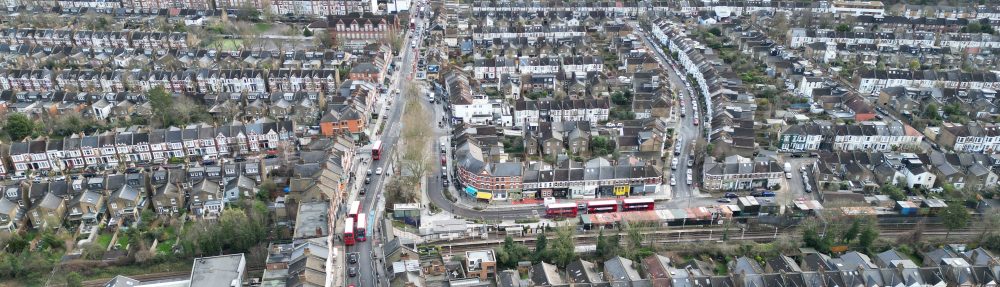
The Kensal Rise Residents’ Association (KRRA) is leading a campaign against Transport for London (TfL) and Metroline over the routing of hundreds of empty diesel Out of Service buses through residential streets. Since Metroline took over the route 28 contract from RATP in May 2024, Out of Service buses have been diverted through Chamberlayne Road and Liddell Gardens, adding to an already congested residential area that already hosts four existing bus routes.
Initially designed for horses, carts, and Victorian-era 2ft x 4ft buses, Chamberlayne Road is owned by Brent Council of the Borough of Brent. This two-thirds residential road now faces the challenge of accommodating up to 8,000 TfL diesel buses (excluding the Out of Service buses) servicing six routes weekly, along with approximately 75,000 vehicles, including cars, vans, HGVs, lorries, and coaches, creating conditions that violate both environmental standards and residents’ fundamental rights to a safe and healthy living environment.
The controversy is heightened by TfL’s decision to specify old style diesel buses in the tender for route 28, despite the previous operator, RAPT, using electric buses and documented air quality concerns in the area. In 2018, the Mayor’s Air Quality Audit for Schools identified Ark Franklin Academy on Chamberlayne Road as among top fifty worst-polluted schools, situated on one of London’s worst polluted roads.
“It’s unacceptable that TfL would knowingly issue a tender requiring diesel buses in an area already suffering from severe air pollution,” says the Residents’ Association. The group points out that Chamberlayne Road, neither an A nor B road, now handles over 1,300 buses daily, resulting in journey times of up to 20 minutes to travel just 0.9 miles.
Residents of both Chamberlayne Road and Liddell Gardens report structural damage to their homes from constant vibrations, while the continuous convoy of empty Out of Service buses takes a circuitous two-mile route through residential streets to reach Metroline’s Willesden Junction depot, despite the availability of more suitable main road alternatives.
Conversations with route 28 drivers have revealed that Metroline’s decisions appear driven primarily by operational cost savings rather than community impact. The Residents’ Association describes this as “morally unacceptable,” noting that Metroline’s continued disregard for community wellbeing stands at odds with their responsibilities as a public transport operator.
The Residents’ Association has escalated the matter to the Local Government Ombudsman after both TfL and Metroline failed to address their concerns adequately. They are also seeking legal advice regarding compensation for property damage.

 Kensal Rise Residents' Association
